

Reference: N94
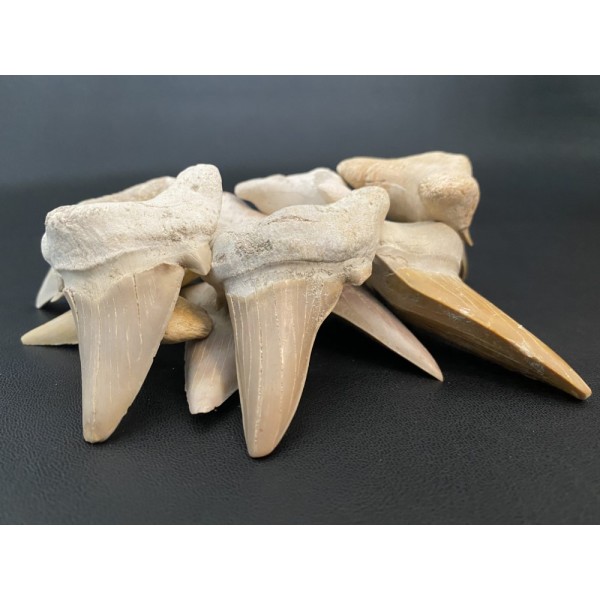
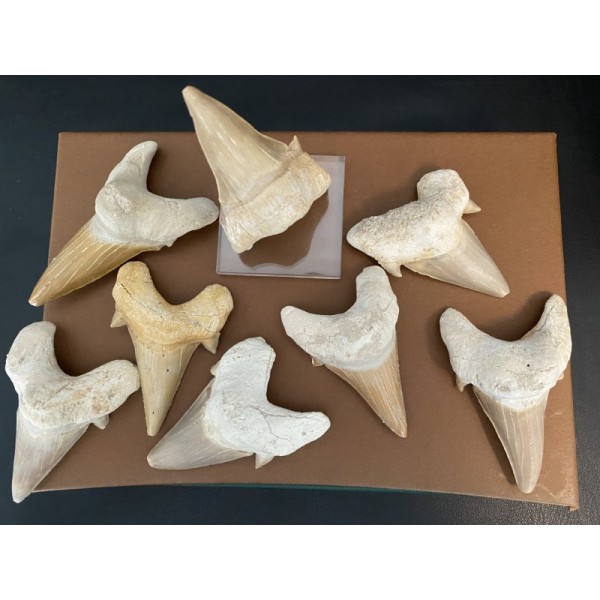
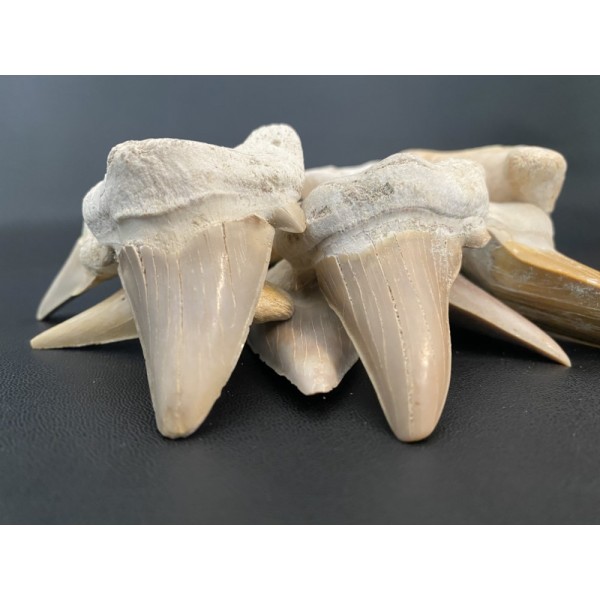
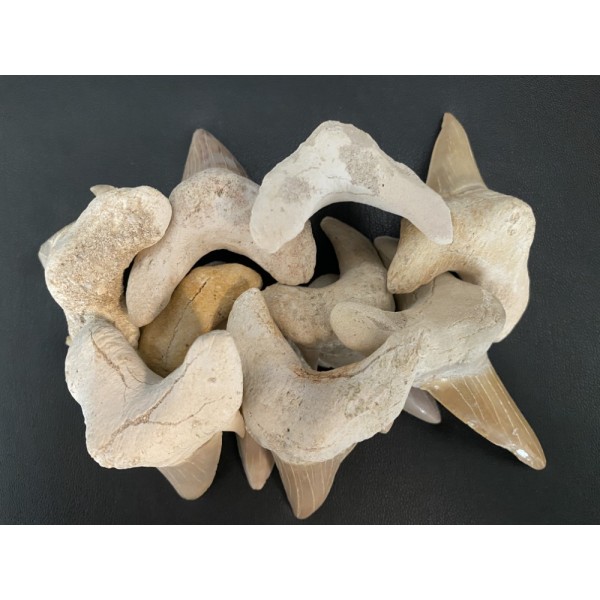
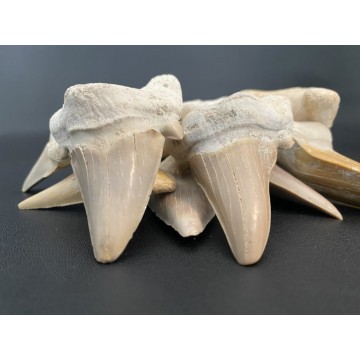
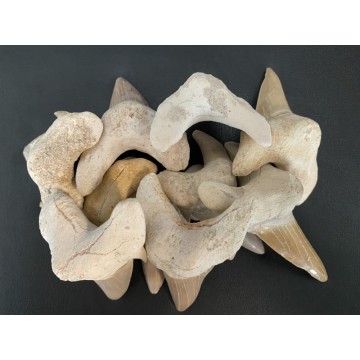
Beautiful Lamna Aschersoni shark teeth, Cretaceous (145 – 66 million years).
Pristine tooth, big size.
From Oued Zem - Morocco.
Dimensions: From 6 cm x 4,5 cm to 8 cm x 4,5 cm
Weight: 25 - 51 g
Price of each shark teeth.
Beautiful Lamna Aschersoni shark teeth, Cretaceous (145 – 66 million years).
Pristine tooth, big size.
From Oued Zem - Morocco.
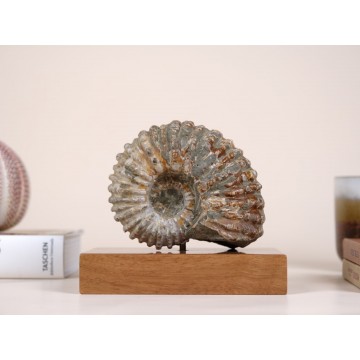
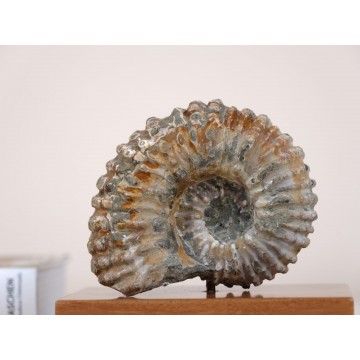
A huge, beautiful coloured Douveilliceras mammilatum from the Albian period, Upper Cretaceous (110 million years) of Mahajanga Province - Madagascar.
A perfect piece for decor, mounted in a handmade wood base.
Madagascar Copal Amber with leaves and insects, mounted in a handmade dark brass base.
Amber is a substance derived from resins (Fossil Resin) of trees and plants that, buried for millions of years, underwent into a fossilization process.
These resins produced by plants acted as protection against the action of bacteria and against the attack of insects that punctured the bark until reaching the interior of the trees.
Over millions of years, amber-forming organic substances ended up forming a hardened, weather-resistant resin.
Olenus sp. ( Trilobite ) a twin specimen in matrix, in a black granite base, from Marroco.
Big size specimen from the Devonian period ( 400/350 million years ), for collectors but also a great decor piece.
Side table with petrified wood and three double handmade brass legs.
Top of the table is a slice of petrified tree - Araucaria species with 220 million years from Early Triassic period, with beautiful pattern and very dark color.
It comes from the Tsingy de Bemaraha National Park in Madagascar.
One of a kind piece.
A great echinoderm Blastoide, from East Timor Permic beds, in an exotic tecula wood base.
Deltablastus permicus in matrix, from the Permiam period (circa 250 million years).
Carcharodon Megalodon (Megalodon meaning “Big Tooth”) is an extinct species of shark regarded as one of the largest and most powerful predators in vertebrate history.
This beast lived approximately 23 to 3.6 million years ago, during the Cenozoic Era. Fossil remains suggest that this giant shark reached a length of 18 metres (59 ft), from USA.
Displayed in a glass box made to measure.
A spectacular large opalized ammonite group from Madagascar, dating to the Cretaceous Albian period (approximately 100–145 million years ago). This impressive fossil features a beautifully preserved Cleoniceras ammonite accompanied by another ammonite species, creating a striking natural composition.
Over millions of years, the original shell material was replaced by opalized minerals, giving the fossils their distinctive color, texture, and fossilized brilliance. The exceptional preservation and large size make this specimen particularly eye-catching.
Both scientifically fascinating and visually captivating, this one-of-a-kind piece makes a remarkable decorative display and a standout addition to any fossil or natural history collection.
Araucaria trunk piece from the famous Ambilobe Petrified forest in Madagascar.
These are formations from the Triassic period with around 220 million years.
Mounted in an acrylic base is a beautiful historic piece!
Cretolamna Aschersoni in matrix, in acrylic base.
Beautiful Lamna Aschersoni shark teeth in their natural matrix, from Cretaceous era (66.0–145.0 million years) - Oued Zem – Morocco.
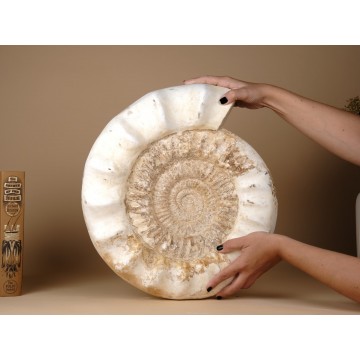
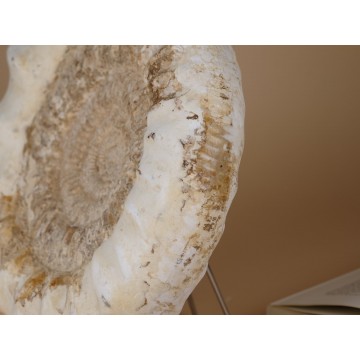
Kranaosphinctes rabei ammonite fossil, a testament to the Jurassic period's ancient splendor. This remarkable specimen hails from the Andangovato region, dating back an astonishing 160 million years to the Middle Jurassic period. It was discovered in Sakaraha, Madagascar.
Boasting both impressive size and impeccable quality, this specimen exhibits no repairs or alterations, making it a true collector's gem. Its sheer magnitude and pristine condition make it an ideal centerpiece for decor or a prized addition to the collection of even the most discerning enthusiasts.
The Kranaosphinctes rabei ammonite is not merely a fossil; it is a living testament to Earth's ancient past, a true masterpiece of natural history.
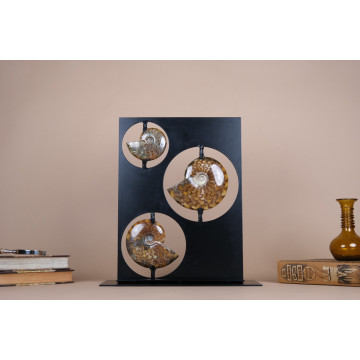
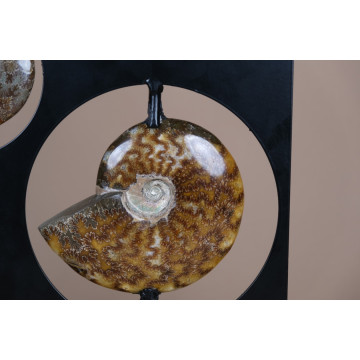
A striking fusion of natural history and modern design, this composition features three genuine polished ammonite fossils from Madagascar, elegantly displayed within a handmade black iron frame.
Formed approximately 100 to 120 million years ago, during the Cretaceous period, these remarkable fossils are the preserved remains of extinct marine cephalopods that once inhabited the ancient seas surrounding Madagascar. Each specimen reveals the iconic spiral geometry and intricate chambered structure that turn ammonites among the most admired fossils in the world.
Their warm natural tones, ranging from golden amber to rich earthy browns, create an elegant contrast with the metal stand. Carefully arranged in varying sizes and positions, the trio forms a balanced and visually dynamic composition, as an admirable piece for your home decor!
Ammonite sliced - Cristal clusters - mounted on a handmade brass stand.
Aioloceras besairie (>140mm) Lower Cretaceous, Albian (100.5–113.0 million years), from Mahajanga, Madagascar.
These ammonite sliced in two parts has been polished for showing the breathtaking inside colors and patterns.
Balanocidaris glandifera - fossil sea urchin - Carapace with radiolas, in a acrilic base.
Excellent fossil of a sea urchin in life position. The hedgehog and spines have preserved the finest details and have been carefully arranged in a living position. The radiolas preserve the original colouring patterns. It is a fossil worthy of a museum.
Sea urchin with spines up to 11 cm, from Upper Jurassic, Kimmeridgian (152.1-157.3 million years) - France.
Pecopteris sp. – This name refers to a broad group of ferns belonging to the order of true ferns. These fossils are often found in large concentrations, preserved within slates formed by the deposition of fallen leaves mixed with clays, which over millions of years compressed and solidified. This high-quality specimen dates back to the Paleozoic Period (approximately 360 million years ago) and originates from the renowned Serra de Valongo in Portugal.
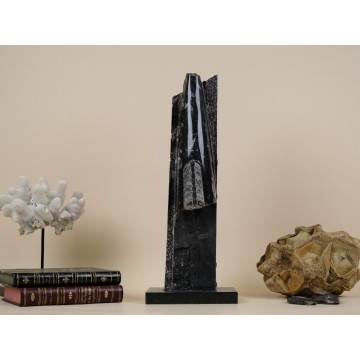
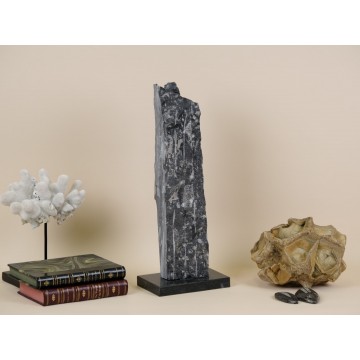
Polished Orthoceras slab fossil with over 400 million years.
As these forms of prehistoric squid were covered in ocean sediments prior to fossilization, the majority of the creatures will be facing in the same relative position, having been lined up by currents on the sea floor prior to being buried. The fossils are exposed and given a high polish to better view the creatures from their surrounding matrix.
The slab features very high relief as well as dramatic texture and detail they had tentacles and ink sacs, much like present-day squid. Except for belemnites, cephalopods had external shells with hollow internal chambers separated by walls called septa. Devonian period, circa 410 million years, Anti-Atlas Mountains - Southern Morocco - mounted in a black granite base.
Vasum Locklini - a Turbinellidae from the Caenozoic period (around 3 million years) from Florida - USA.
Always a beautiful intricate shell, mounted in a black lacquered wood base.