Reference: N192
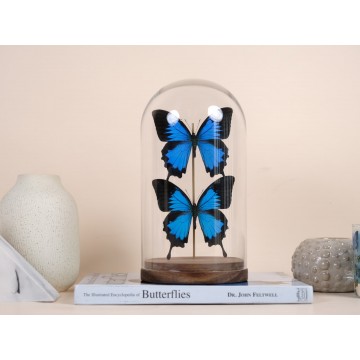
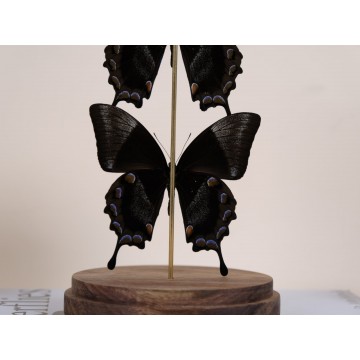
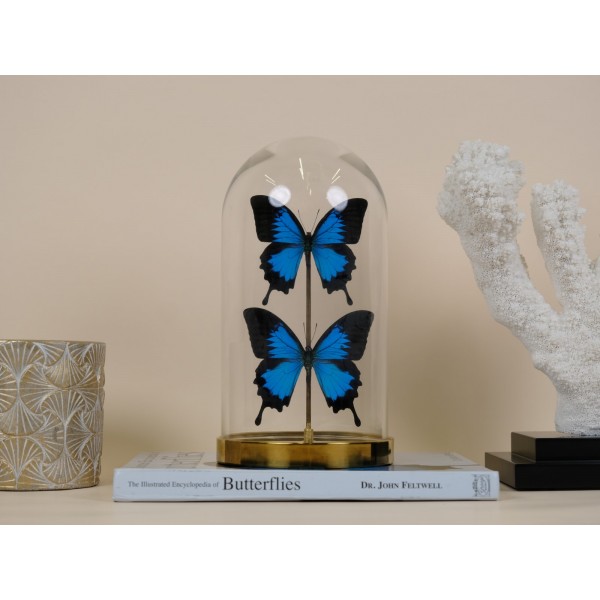
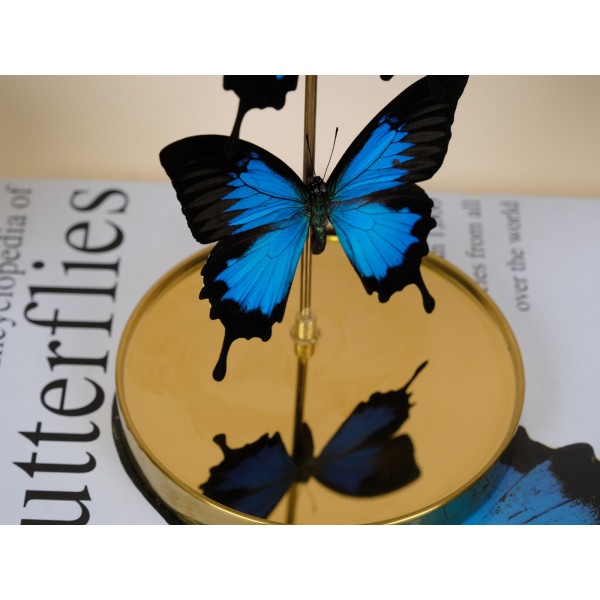
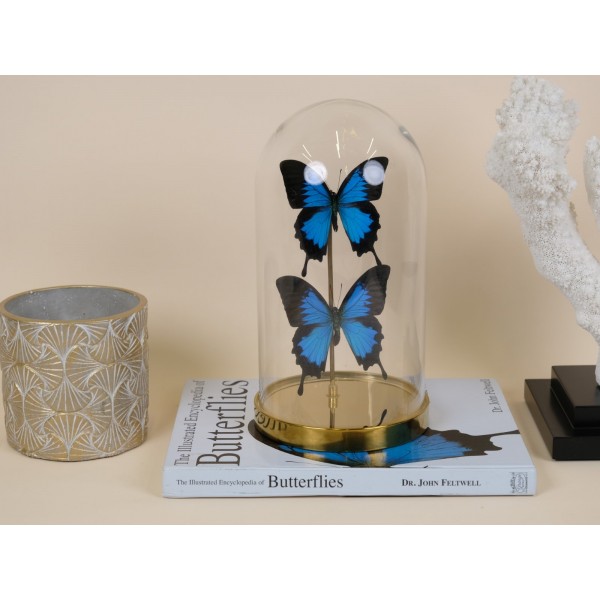
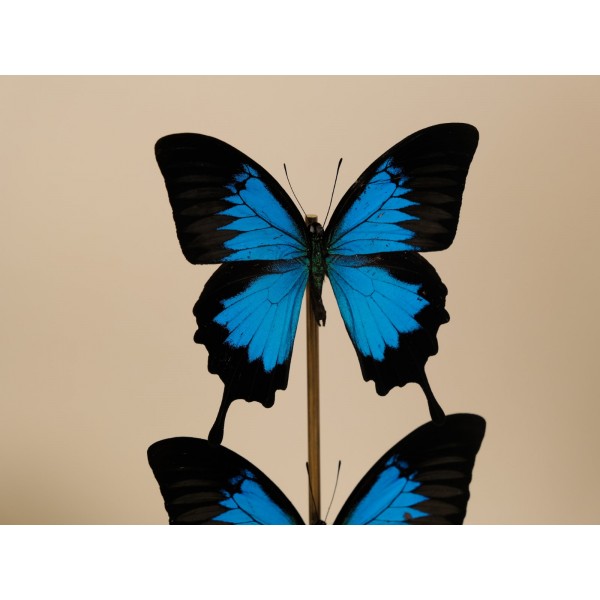
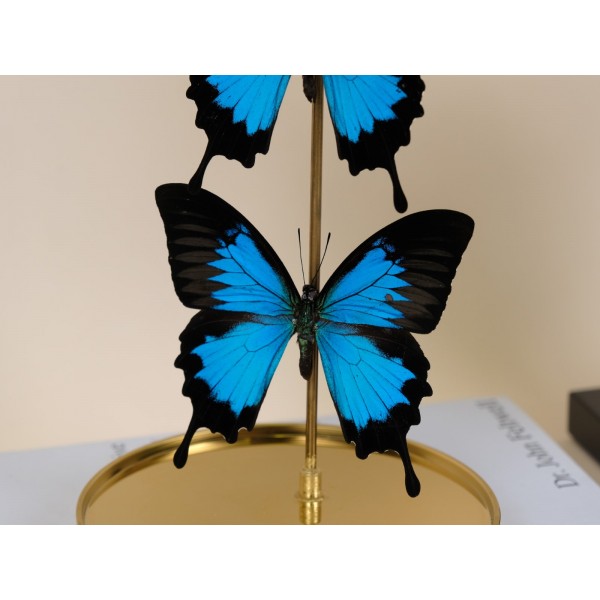
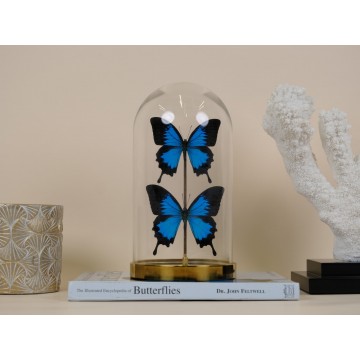
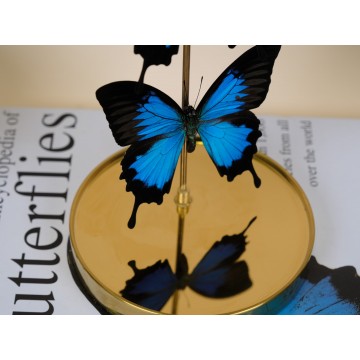
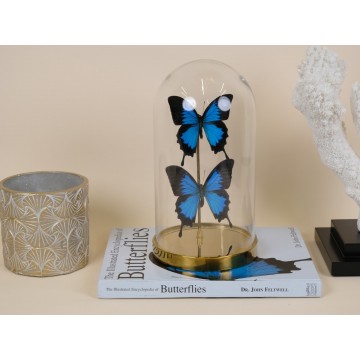
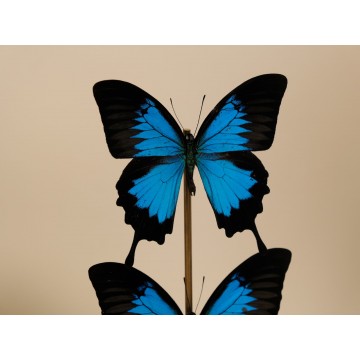
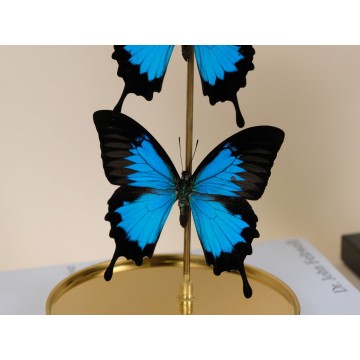
Brass glass dome with two Papilio ulysses from Ceram - Moluccan Island, a superb exclusive species with bright contrast of black and deep blue.
Papilio ulysses - popularly named as Ulysses Butterfly, Blue Mountain Swallowtail, Mountain Blue or Blue Emperor - it is a butterfly of the Papilionidae family and Papilioninae subfamily, found in the Australian biogeographic region and native to the Wallacea area and the island of Nova Guinea, Bismarck archipelago and Northern Australia.
Dimensions: 14,5 cm diameter x 26 cm
Weight: 868 g
Brass glass dome with two Papilio ulysses from Ceram - Moluccan Island, a superb exclusive species with bright contrast of black and deep blue.
Papilio ulysses - popularly named as Ulysses Butterfly, Blue Mountain Swallowtail, Mountain Blue or Blue Emperor - it is a butterfly of the Papilionidae family and Papilioninae subfamily, found in the Australian biogeographic region and native to the Wallacea area and the island of Nova Guinea, Bismarck archipelago and Northern Australia.
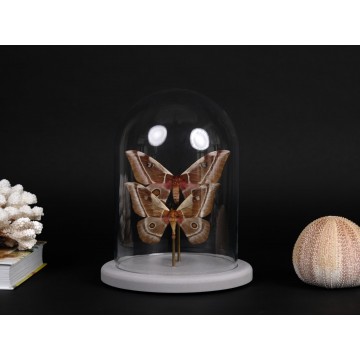
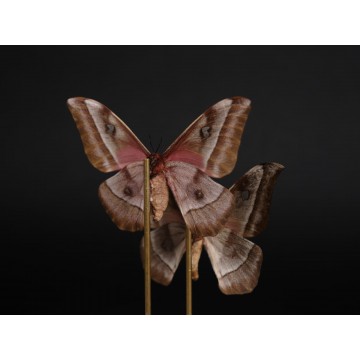
Bunaea aslauga couple in a glass dome. The Madagascar emperor moth, is an African moth belonging to the family Saturniidae.
The male differ from the female (on the back) in size and completely different antlers.
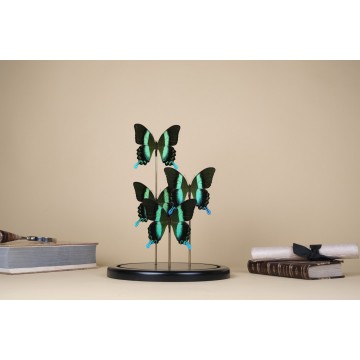
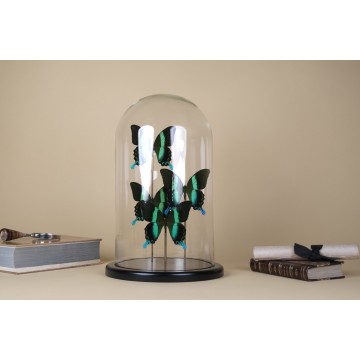
Papilio blumei, commonly known as the Peacock Swallowtail, is a stunning butterfly belonging to the Papilionidae family. Endemic to the Indonesian island of Sulawesi, this butterfly showcases a wingspan ranging from 120 to 140 mm. One of the most captivating features of P. blumei is the metallic hues adorning its wings, which become particularly mesmerizing when observed from specific angles. What makes this butterfly truly remarkable is the presence of rows of minute concave surfaces on its wings, reflecting light in a multitude of ways. Notably, the central concave surface emits a yellow-green light, while the edges shimmer with a captivating blue. This collection includes four specimens, each meticulously preserved in a handmade glass dome.
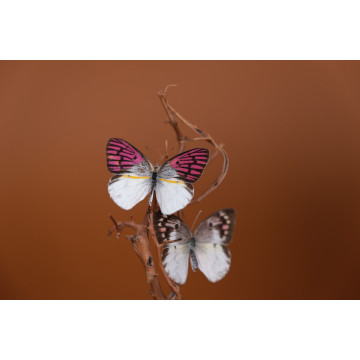
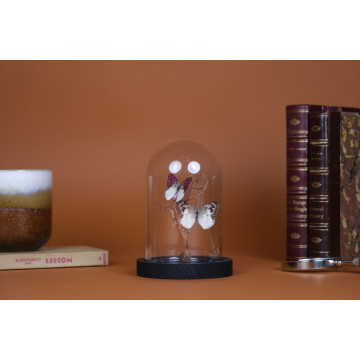
A striking species of the Pieridae family, notable for its pronounced sexual dimorphism. The males display vivid red to lilac tones on the upper wings, while the females exhibit more subdued brown and grey coloration.
Native to Madagascar, this beautifully preserved specimen is mounted on a natural Redmoor wood branch, creating a delicate and visually captivating presentation.
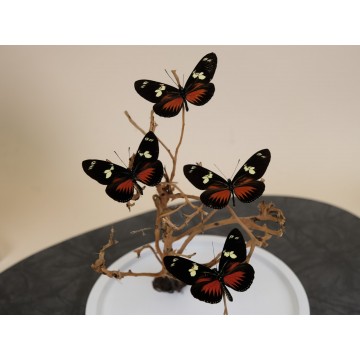
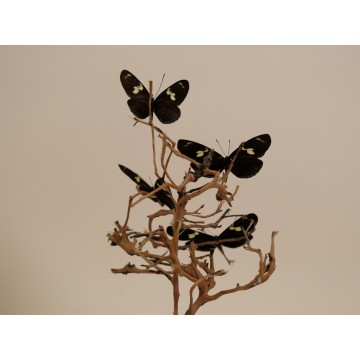
Heliconius doris - Doris Longwing, beautiful butterflies belonging to Nymphalidae family, from Peru.
Mounted in a Redmoor wood branch in a glass vitrine with white wood base.
The Colotis antevippe is a stunning butterfly species belonging to the Pieridae family, native to the Afrotropical realm.
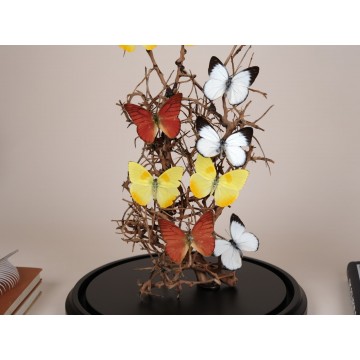
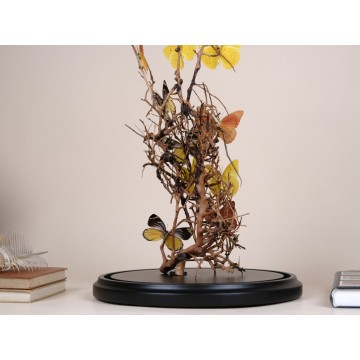
This particular set features five exquisite specimens from Tanzania, elegantly displayed on a Redmoor wood branch in natural positions. Their vibrant coloration makes them a captivating decorative piece and a prized addition for collectors.
Phoebis philea (from Colombia), Appias nero (from Philippines) and Delias descombesi (from Indonesia) glass dome.
Highly decorative glass dome with four butterflies of each species, shining colours and beautifully mounted in a handmade Redmoor piece of wood.
One of a Kind piece.
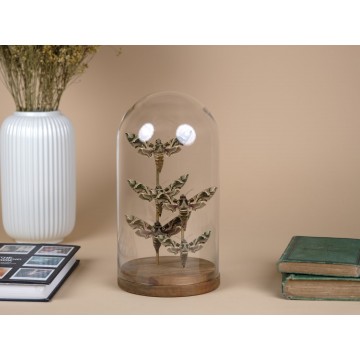
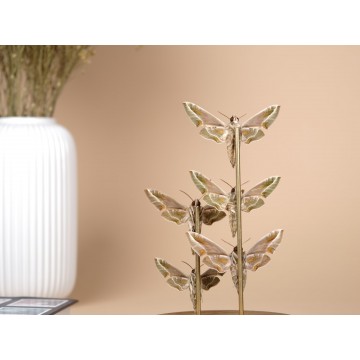
Behold the beauty of a stunning glass dome housing five Daphnis nerii, commonly known as the Army Green moth. This large hawk-moth species can be found in expansive regions across Africa, Asia, and Hawaii. With its migratory nature, it gracefully travels to parts of eastern and southern Europe, including Turkey, and on rare occasions, even reaches western Europe, including England, and extends as far north as Scotland during the summer season.
The specimens within this collection were carefully sourced from Egypt, adding to their allure. The unique coloration and intricate patterns of the Daphnis nerii make them a truly captivating species. Their vibrant presence adds a touch of fascination and wonder to any decorative setting.
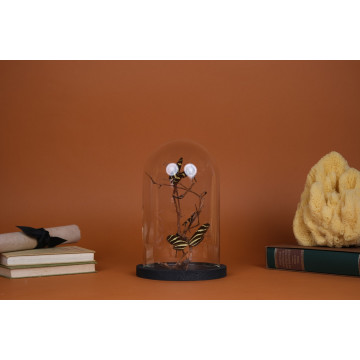
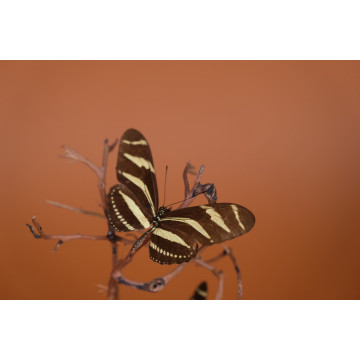
Heliconius charithonia, commonly known as the Zebra Longwing or Zebra Heliconian, is a butterfly of the subfamily Heliconiinae within the family Nymphalidae. First described by Carl Linnaeus in the 1767 12th edition of Systema Naturae, this species is easily recognized by its bold black-and-white striped wings, an aposematic pattern that warns predators of its unpalatability. It is also the state butterfly of Florida.
Distributed throughout South and Central America and extending north into southern Texas and peninsular Florida—with seasonal migrations into other U.S. states—this particular specimen originates from Cuba. It is beautifully mounted on a handmade branch of Namibian redwood and presented under a glass dome, creating a refined and captivating display piece.
Glass dome with giant moth, from Thailand.
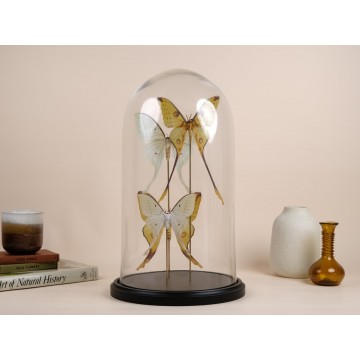
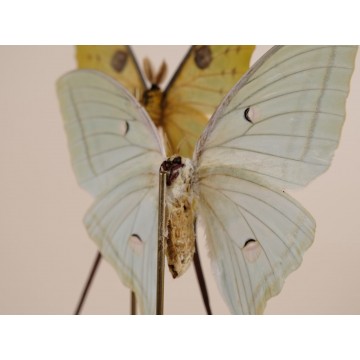
Male and female of Argema mittrei known as Comet moth or Madagascan moon moth, is a huge beautiful dark yellow moth, seldom seen in this quality.
Male and female of Actias selene known as Indian moon moth or Indian luna moth, is a species of saturniid moth from Asia.
This species is popular among amateur entomologists. They fly mainly at night.
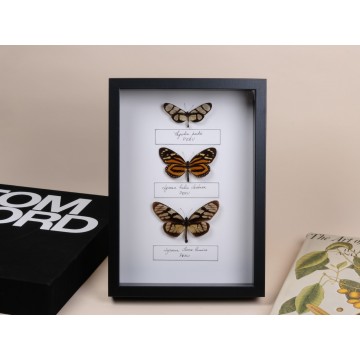
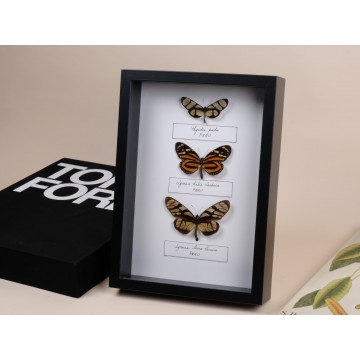
Thyridia psidii, Lycorea halia cleobaea and Lycorea ilione lamira in a black glass frame.
These beautiful delicate butterflies are all from Peru.
Wood glass dome with two Papilio ulysses from Ceram - Moluccan Island, a superb exclusive species with bright contrast of black and deep blue.
Papilio ulysses - popularly named as Ulysses Butterfly, Blue Mountain Swallowtail, Mountain Blue or Blue Emperor - it is a butterfly of the Papilionidae family and Papilioninae subfamily, found in the Australian biogeographic region and native to the Wallacea area and the island of Nova Guinea, Bismarck archipelago and Northern Australia.
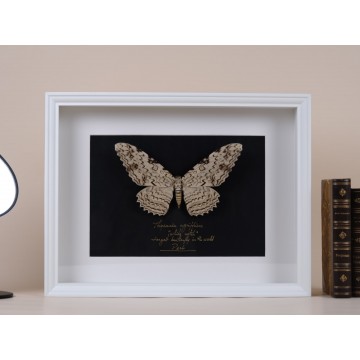
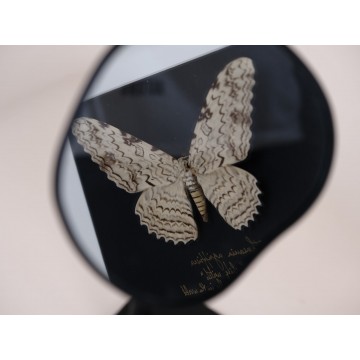
Thysania agrippina is a species of moth in the family Erebidae first described by Pieter Cramer in 1776.
The most commonly accepted English name is the "White witch". Thysania agrippina is a competitor for title of "largest insect". This may be true by the measure of wingspan—a Brazilian specimen with a wingspan of almost 30 cm (12 in) appears to hold the record. The "White witch" occurs from Uruguay to Mexico. One story of the derivation of the common name: early naturalists collected specimens of birds and bats with shotguns. An enormous darting flyer high in the canopy was a tempting target. Firing a cloud of pellets at a "White witch" moth did not necessarily bring it down, however, because the body is small relative to the wing area.
Very hard to find nowadays this perfectly beautiful specimen from Peru.
One of a kind handmade piece.
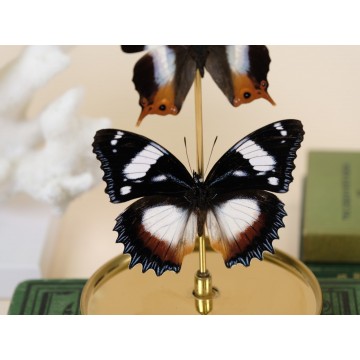
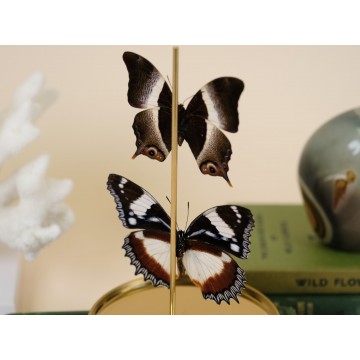
Palla decius and Hypolimnias dexithea in a golden base glass dome.
Palla decius, the white-banded palla, from Congo. Hypolimnias dexithea from Madagascar.
Both belonging to the Nymphalidae family.
Superb examples of how beautiful butterflies can be.
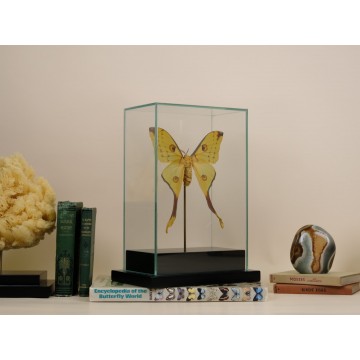
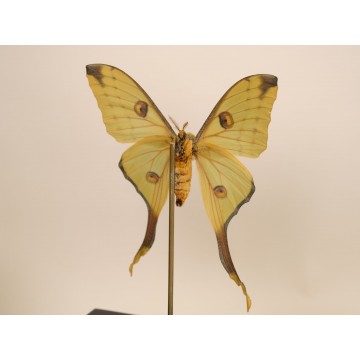
Argema mittrei ( female ) - Madagascar Moon butterfly is a very big size moth, with a beautiful colour and shape.
A nature prodigy from Madagascar.
Displayed in a glass cage.
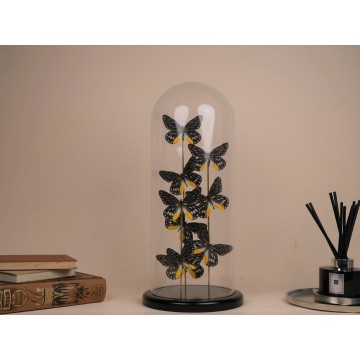
Glass dome with 9 Delias belladonna butterflies, these butterflies are of a great beauty, from the Himalayas to China and India to Thailand.
These ones came from Thailand.
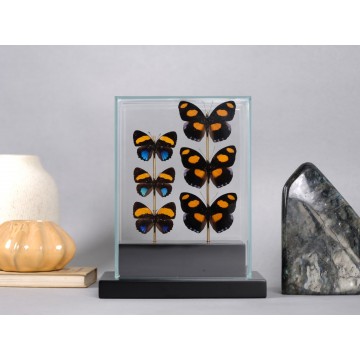
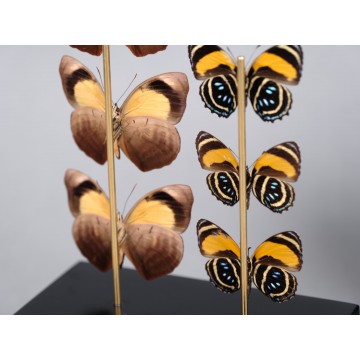
Callicore lyca and Catonephele numilia glass vitrine.
Callicore lyca, the Aegina numberwing, is a butterfly of the family Nymphalidae. Superb coloured specimen. It is found from the south of Mexico to Peru, these one's are from Perú.
Catonephele numilia, the Blue-Frosted Banner, is a butterfly of the family Nymphalidae found in Central and South America. This butterfly usually flies along the ground and close to the ripe fruits and flowers.
An exceptional decor piece.