Reference: N834
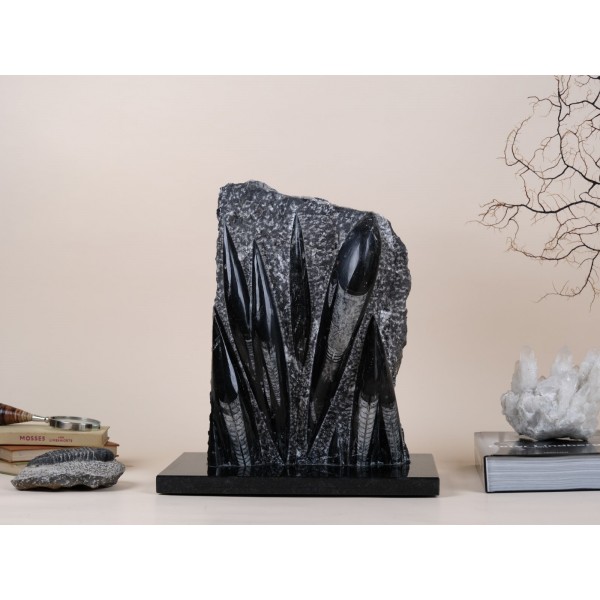
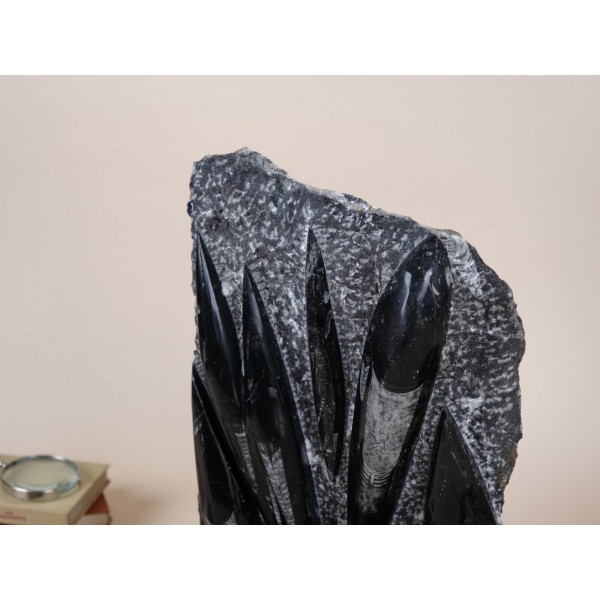
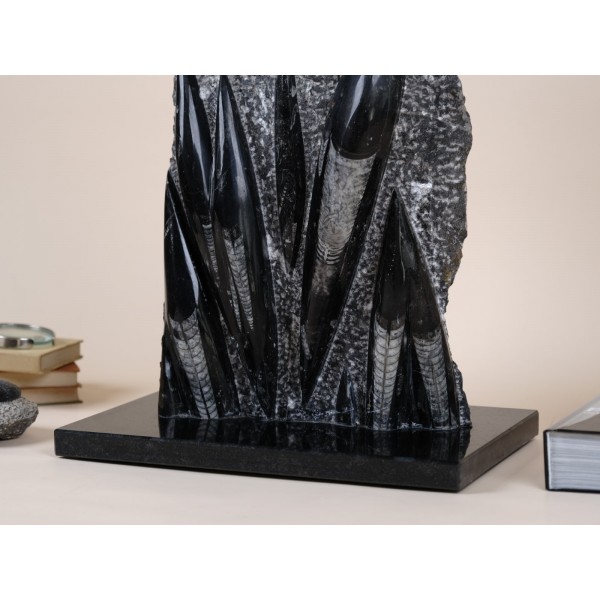
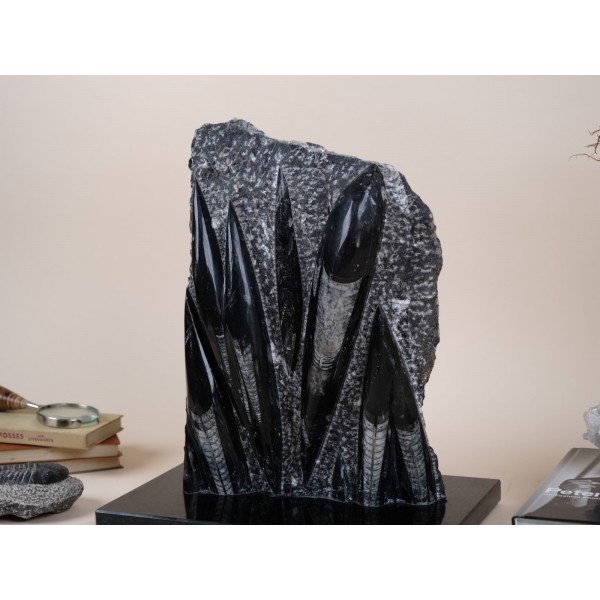
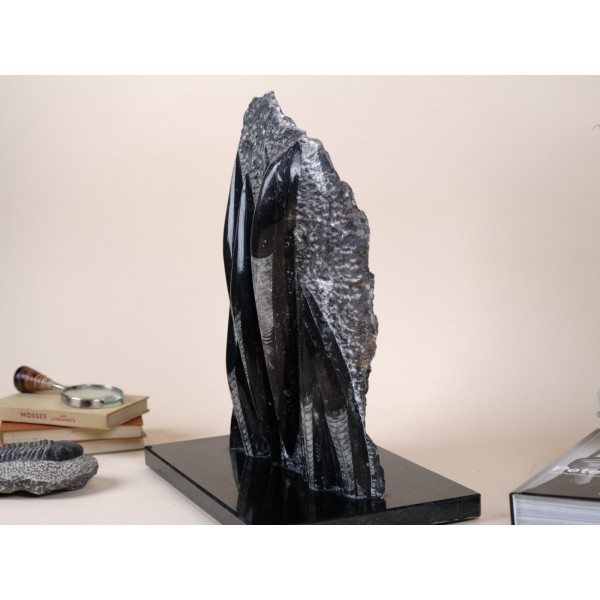
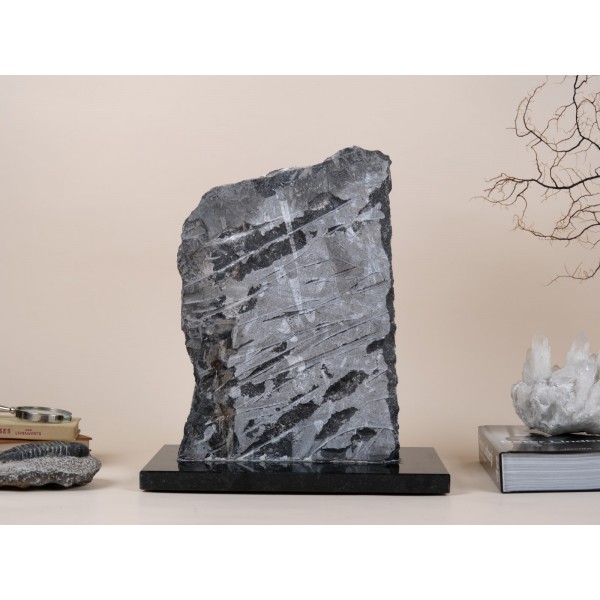
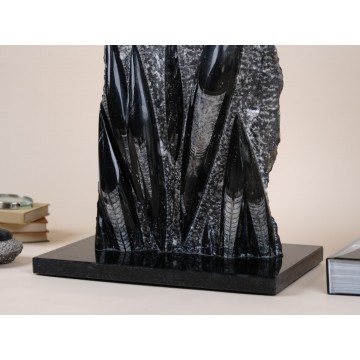
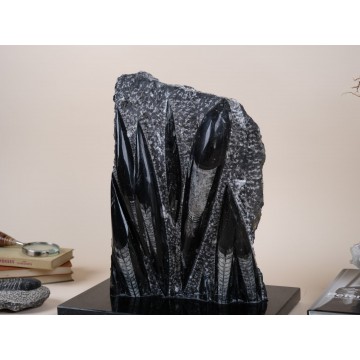
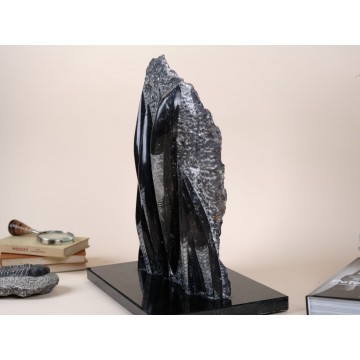
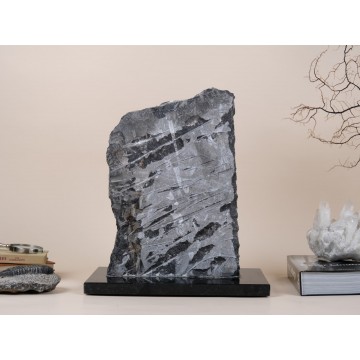
Polished Orthoceras slab fossil with over 400 million years.
As these forms of prehistoric squid were covered in ocean sediments prior to fossilization, the majority of the creatures will be facing in the same relative position, having been lined up by currents on the sea floor prior to being buried. The fossils are exposed and given a high polish to better view the creatures from their surrounding matrix.
The slab features very high relief as well as dramatic texture and detail they had tentacles and ink sacs, much like present-day squid. Except for belemnites, cephalopods had external shells with hollow internal chambers separated by walls called septa. Devonian period, circa 410 million years, Anti-Atlas Mountains - Southern Morocco - mounted in a black granite base.
Dimensions: 36 cm x 31,5 cm // Base: 31,5 cm x 20 cm x 2 cm
Weight: 10,8 Kg
Polished Orthoceras slab fossil with over 400 million years.
As these forms of prehistoric squid were covered in ocean sediments prior to fossilization, the majority of the creatures will be facing in the same relative position, having been lined up by currents on the sea floor prior to being buried. The fossils are exposed and given a high polish to better view the creatures from their surrounding matrix.
The slab features very high relief as well as dramatic texture and detail they had tentacles and ink sacs, much like present-day squid. Except for belemnites, cephalopods had external shells with hollow internal chambers separated by walls called septa. Devonian period, circa 410 million years, Anti-Atlas Mountains - Southern Morocco - mounted in a black granite base.
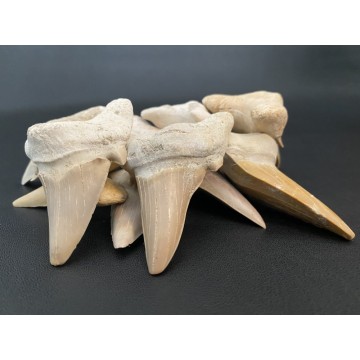
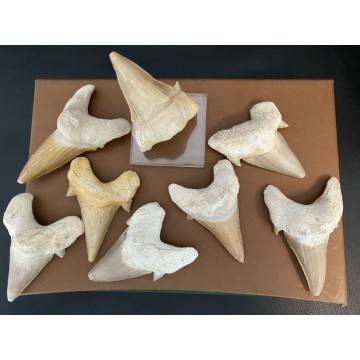
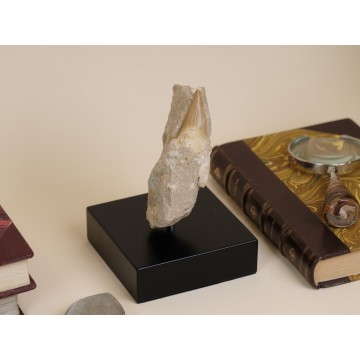
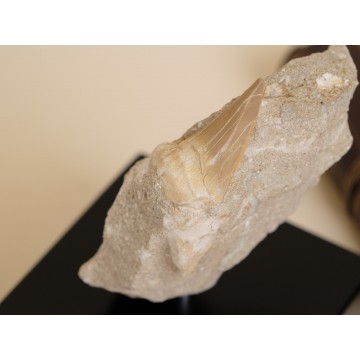
Beautiful Lamna Aschersoni shark teeth, Cretaceous (145 – 66 million years).
Pristine tooth, big size.
From Oued Zem - Morocco.
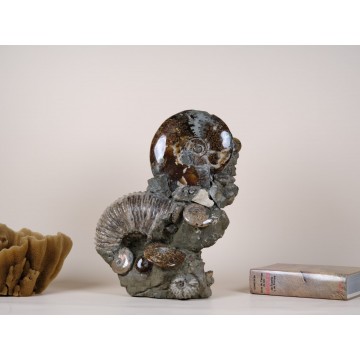
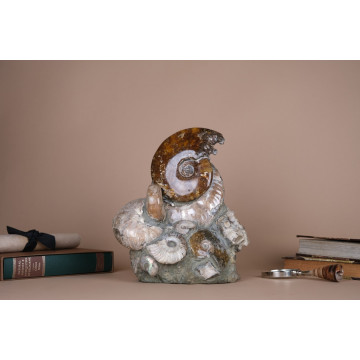
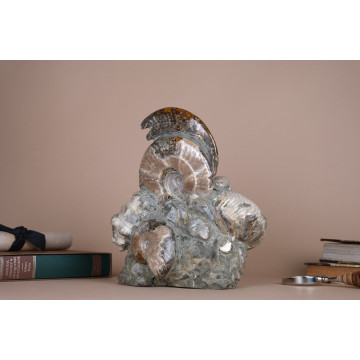
A spectacular large opalized ammonite group from Madagascar, dating to the Cretaceous Albian period (approximately 100–145 million years ago). This impressive fossil features a beautifully preserved Cleoniceras ammonite accompanied by another ammonite species, creating a striking natural composition.
Over millions of years, the original shell material was replaced by opalized minerals, giving the fossils their distinctive color, texture, and fossilized brilliance. The exceptional preservation and large size make this specimen particularly eye-catching.
Both scientifically fascinating and visually captivating, this one-of-a-kind piece makes a remarkable decorative display and a standout addition to any fossil or natural history collection.
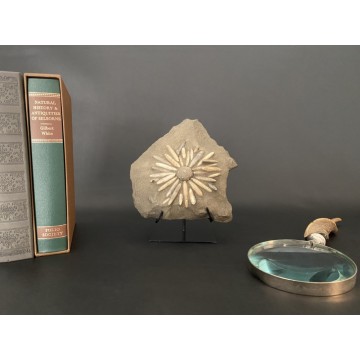
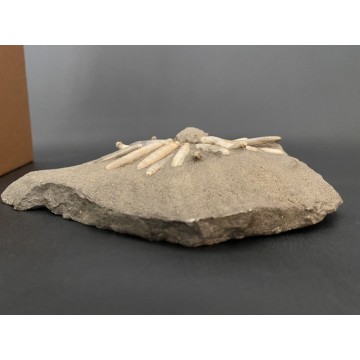
Fossil sea urchin - Gymnocidaris koechlini - Excellent fossil of a sea urchin in life position.
The sea urchin and the spines finest details have been preserved and have been carefully arranged in position of life. The spines preserves the original colouring patterns. Sea urchin with 10 cm spicules - from medium Jurassic, Bajociano (168.3-170.3 million years), Boulemane, Morocco.
A spectacular large opalized ammonite group from Madagascar, dating to the Cretaceous Albian period (approximately 100–145 million years ago). This impressive fossil features a beautifully preserved Cleoniceras ammonite accompanied by another ammonite species, creating a striking natural composition.
Over millions of years, the original shell material was replaced by opalized minerals, giving the fossils their distinctive color, texture, and fossilized brilliance. The exceptional preservation and large size make this specimen particularly eye-catching.
Both scientifically fascinating and visually captivating, this one-of-a-kind piece makes a remarkable decorative display and a standout addition to any fossil or natural history collection.
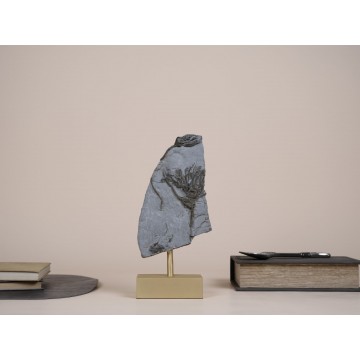
Arthroacantha carpenteri - Crinoid Fossil from Devonian period (380-400 million years) of Silvânia formations Ohio - USA.
A superb specimen, in a handmade brass base. Very aesthetic piece, with very detailed parts.
Cretolamna Aschersoni in matrix, in acrylic base.
Beautiful Lamna Aschersoni shark teeth in their natural matrix, from Cretaceous era (66.0–145.0 million years) - Oued Zem – Morocco.
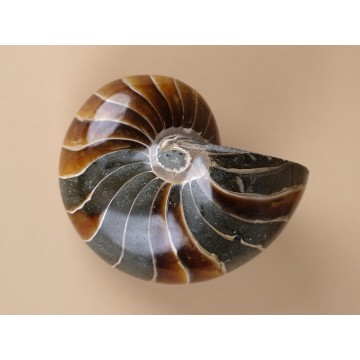
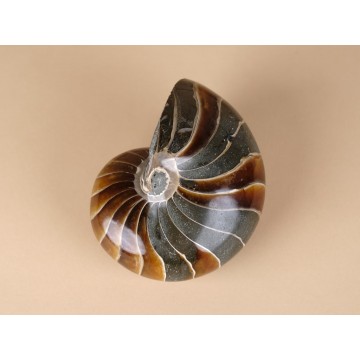
Nautiloid Fossil: Cymatoceras sp. – a remarkable specimen hailing from the Cretaceous-era formations of Mahajanga Province, Madagascar, dating back approximately 130 million years. This fossilized treasure is a testament to the enduring beauty of nature's craftsmanship, showcasing the intricate layers of Calcite in stunning detail.
Cymatoceras sp., a member of the Nautilidae family, offers us a glimpse into the ancient oceans of our planet. These creatures, reminiscent of modern squids with their distinctive shells, first emerged during the Late Triassic period and continue to thrive in our oceans today. This polished Nautiloid fossil serves as a captivating window into the distant past, where the mysteries of prehistoric life are etched in stone for us to marvel at and contemplate.
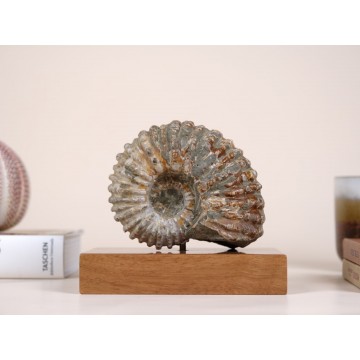
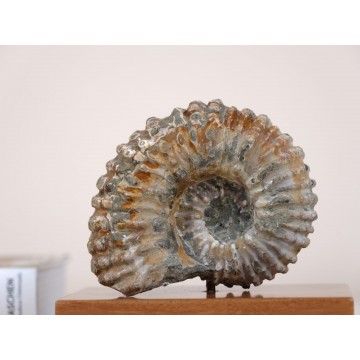
A huge, beautiful coloured Douveilliceras mammilatum from the Albian period, Upper Cretaceous (110 million years) of Mahajanga Province - Madagascar.
A perfect piece for decor, mounted in a handmade wood base.
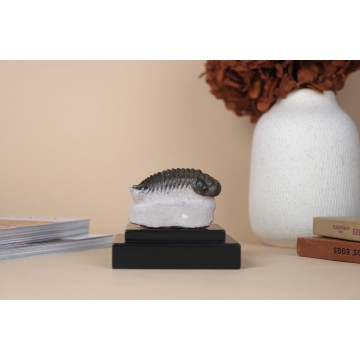
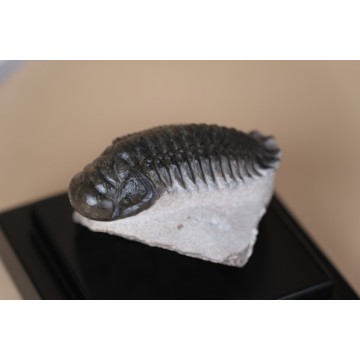
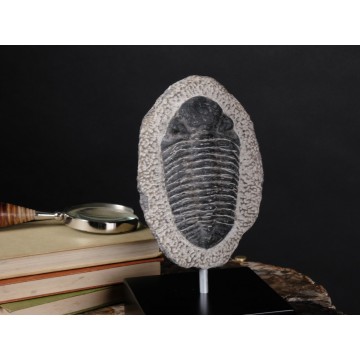
Crotalocephalus gibbus fossil Trilobite, a spectacular piece featuring a perfect dorsal view, still embedded in its original matrix. Skillfully prepared, this fossil is well preserved, 100% natural, and sandblasted with no restoration or added trilobite spines or paint.
Dating back to the Lower Devonian period, Landhar formation, Pragian stage (410 – 407 million years), this specimen was recovered from Aatchana, Errachidia Province, Morocco.
It is mounted on a black lacquered double wood base.
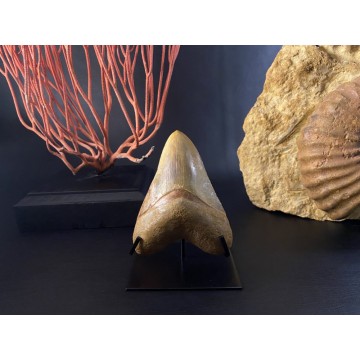
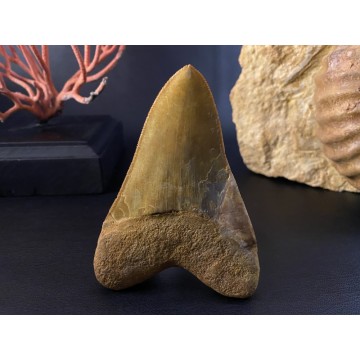
Carcharocles megalodon - Neogen - Miocene, Burdigalian (15.97 - 20.44 million years) - Indonesia. A huge, extra large and superb tooth, with a wonderful colouration, as characterise the megalodon of Indonesia. Beautiful teeth with a colour very similar to those of Chile and Peru, deposits closed for a long time. These megalodons have been on the market very recently.
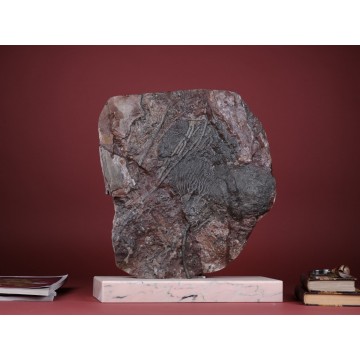
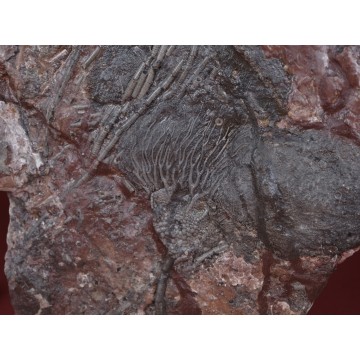
A superb Scyphocrinites elegans in a rose marble base.
A One of a Kind piece, from Permian period (358 to 419 million years) of Erfoud - Morocco, an extinct genus of crinoid Camarocrinus.
Beautiful fossil slabs colors and pattern made an extraordinary decor piece.
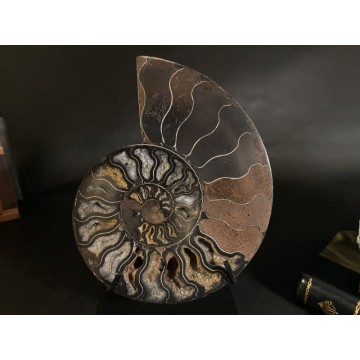
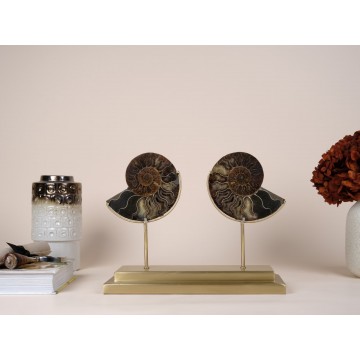
Finest quality Ammonite sliced - Cristal clusters - with beautiful colors in an elegant iron stand.
Aioloceras besairiei (>140mm) Lower Cretaceous, Albian (100.5–113.0 million years), from Mahajanga , Madagascar.
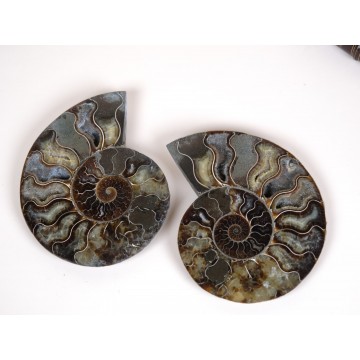
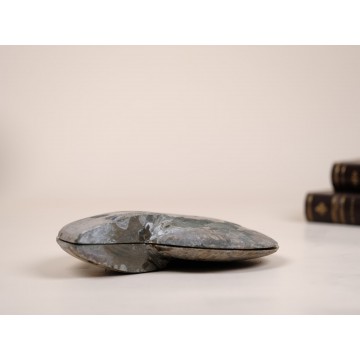
This ammonite sliced in two parts has been polished for showing the breathtaking inside colors and patterns!
Cleoniceras besairiei (Collignon, 1949), cut and polished pair. They are lovely specimens that show the individual chambers of the Ammonite in great detail with all interior cristalized. They are from the Lower Cretaceous – Albian period (100 – 115 million years) from Mitsinjo, near Majunga.
Think of the Ammonite spirals as a filter, drawing in these dense energies which are no longer needed, moving them through the spirals and releasing them as fresh, positive, loving life force energies. The Ammonite is a very powerful earth healing fossil.
Ammonites are often used for activating Kundalini and life path energies. It is often recommended to keep an Ammonite in your home to attract health, prosperity and success.
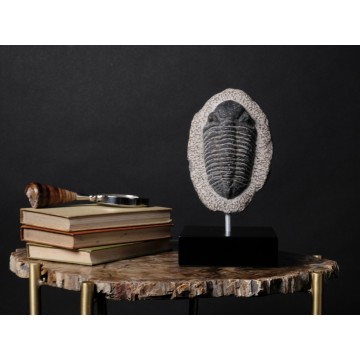
Phacops sp. from the Middle Devonian period ( 395 million years ) of the Djebel Issoumour area, Atlas Mountains - Morocco.
Prepared and restored, excellent for beginner collectors or as decor piece, in a black lacquered wood base.
Ammonite sliced - Cristal clusters - mounted on a handmade brass stand.
Aioloceras besairie (>140mm) Lower Cretaceous, Albian (100.5–113.0 million years), from Mahajanga, Madagascar.
These ammonite sliced in two parts has been polished for showing the breathtaking inside colors and patterns.
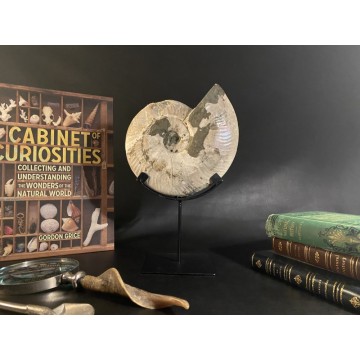
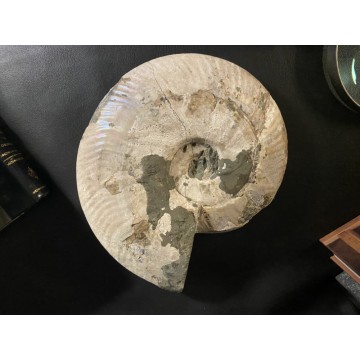
This beautiful ammonite is a Jurassic Cleoniceras from Madagascar that preserves part of the original mother-of-pearl iridescent shell.
The Ammonite doesn't have any gluing work, the fracture lines on the shell are internal and do not affect the integrity of the fossil.